
Verizon
Lower support costs and self-service through improved notifications and an outage map
Lower support costs and self-service through improved notifications and an outage map
Lower support costs and self-service through improved notifications and an outage map
Verizon alerts customers to network changes, but network changes still drive high support call volume.
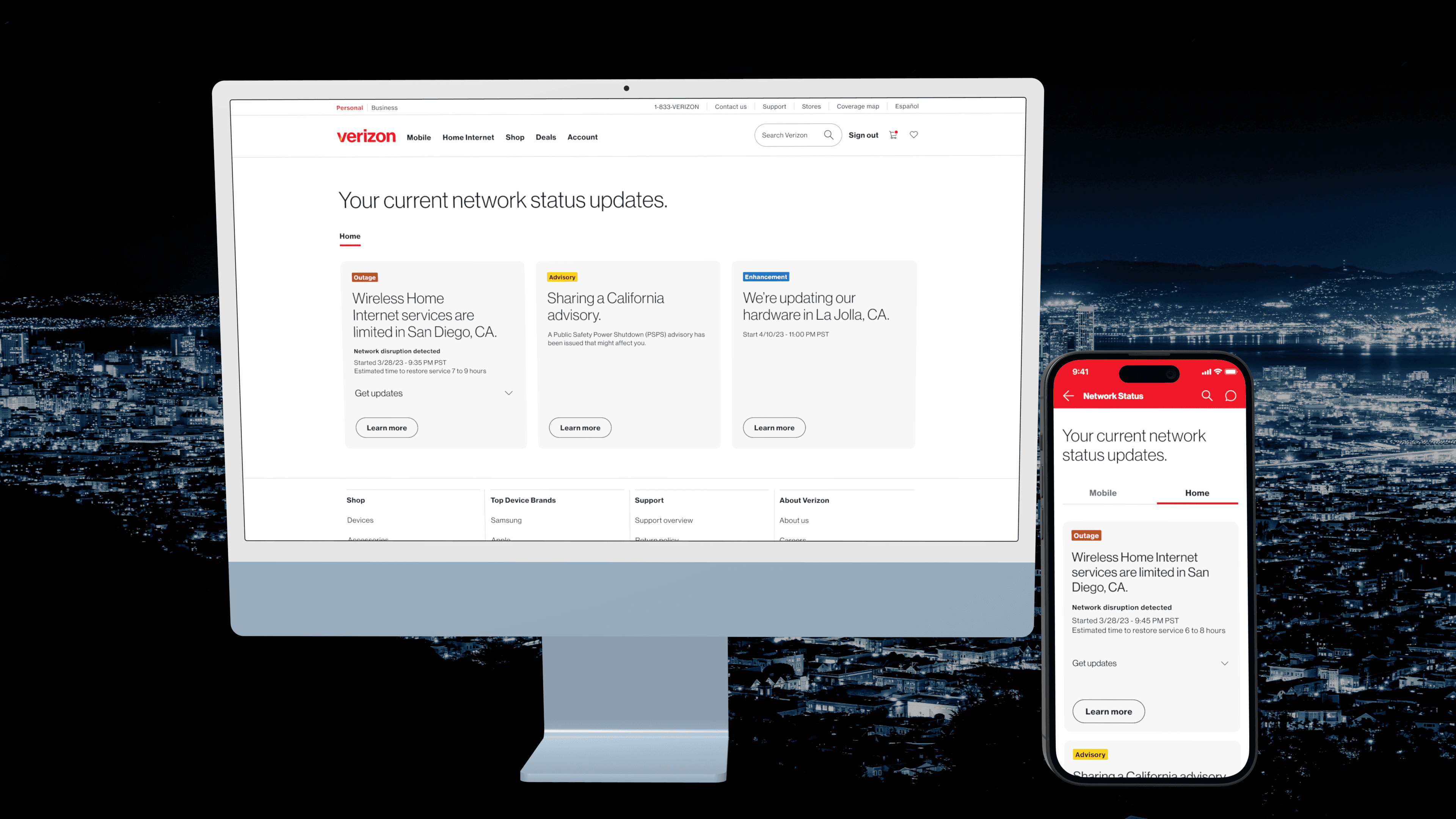
I designed a system that surfaces all active issues affecting a user, delivers real-time resolution updates, and visualizes outage impact on a map—giving customers clarity and reducing the need to contact support.
*This page is an overview of the work. Want to see the full case study?*
Verizon alerts customers to network changes, but network changes still drive high support call volume.
I designed a system that surfaces all active issues affecting a user, delivers real-time resolution updates, and visualizes outage impact on a map—giving customers clarity and reducing the need to contact support.
*This page is an overview of the work. Want to see the full case study?*
Verizon alerts customers to network changes, but network changes still drive high support call volume.
I designed a system that surfaces all active issues affecting a user, delivers real-time resolution updates, and visualizes outage impact on a map—giving customers clarity and reducing the need to contact support.
*This page is an overview of the work. Want to see the full case study?*
Process
Users had incomplete network information
Users had incomplete network information
If customers got notified about upcoming planned maintenance in a week while they were experiencing an outage, they would lose all access to outage information.
Outages were also only shown by a single city/state centerpoint (e.g., Atlanta, GA), failing to reflect their true scale—from small neighborhoods to entire cities.
If customers got notified about upcoming planned maintenance in a week while they were experiencing an outage, they would lose all access to outage information.
Outages were also only shown by a single city/state centerpoint (e.g., Atlanta, GA), failing to reflect their true scale—from small neighborhoods to entire cities.
If customers got notified about upcoming planned maintenance in a week while they were experiencing an outage, they would lose all access to outage information.
Outages were also only shown by a single city/state centerpoint (e.g., Atlanta, GA), failing to reflect their true scale—from small neighborhoods to entire cities.
How do we make full network information accessible?
How do we make full network information accessible?
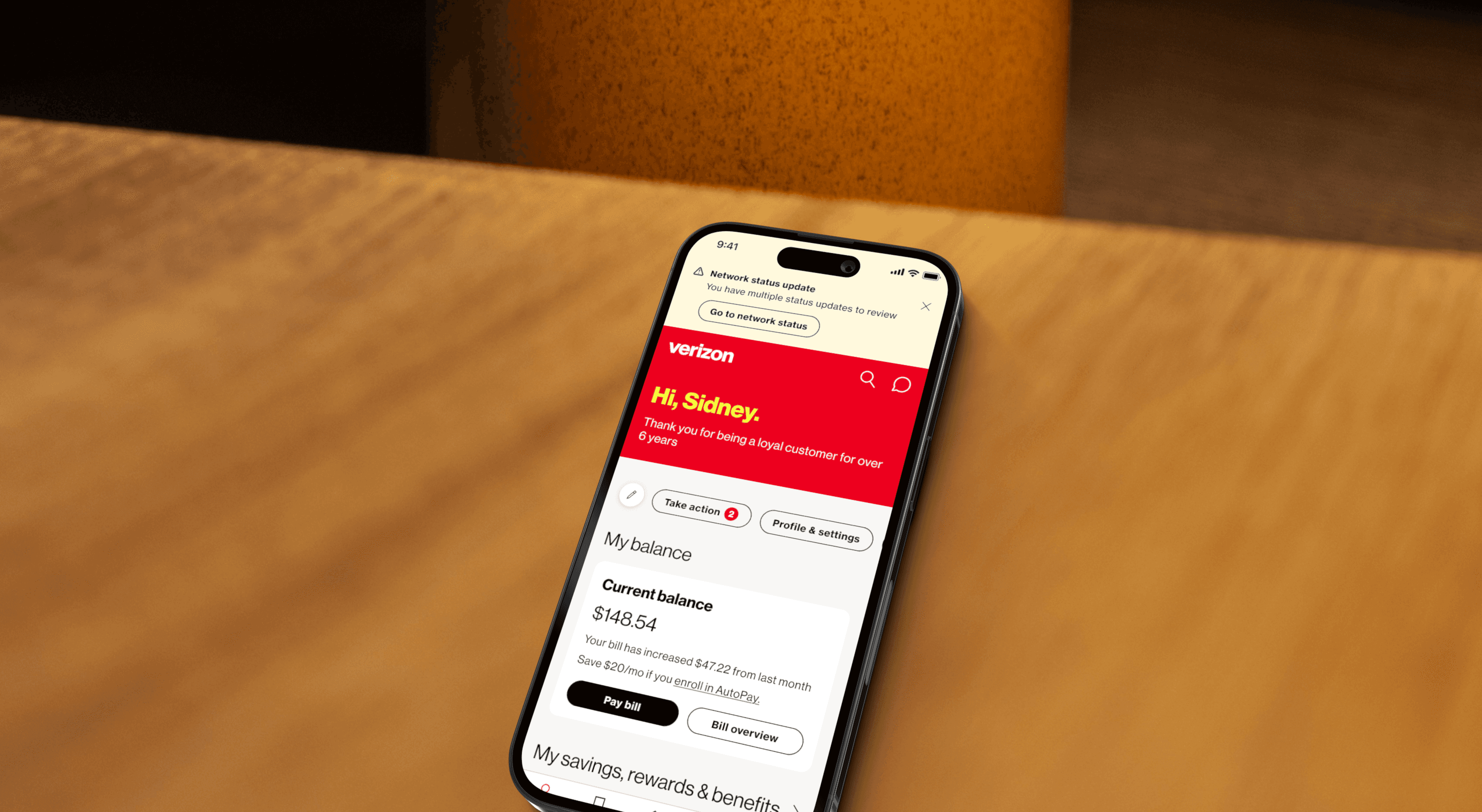
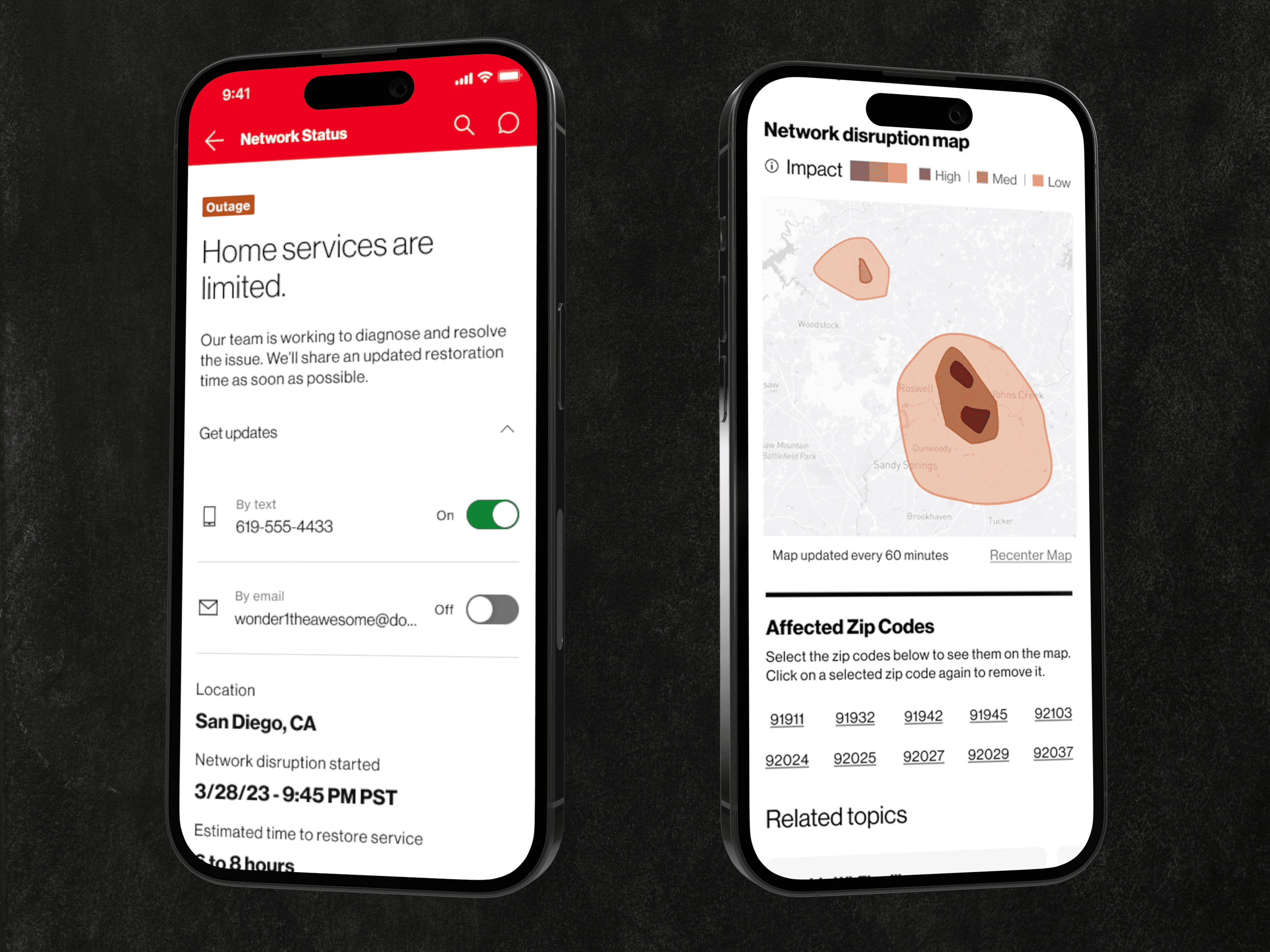
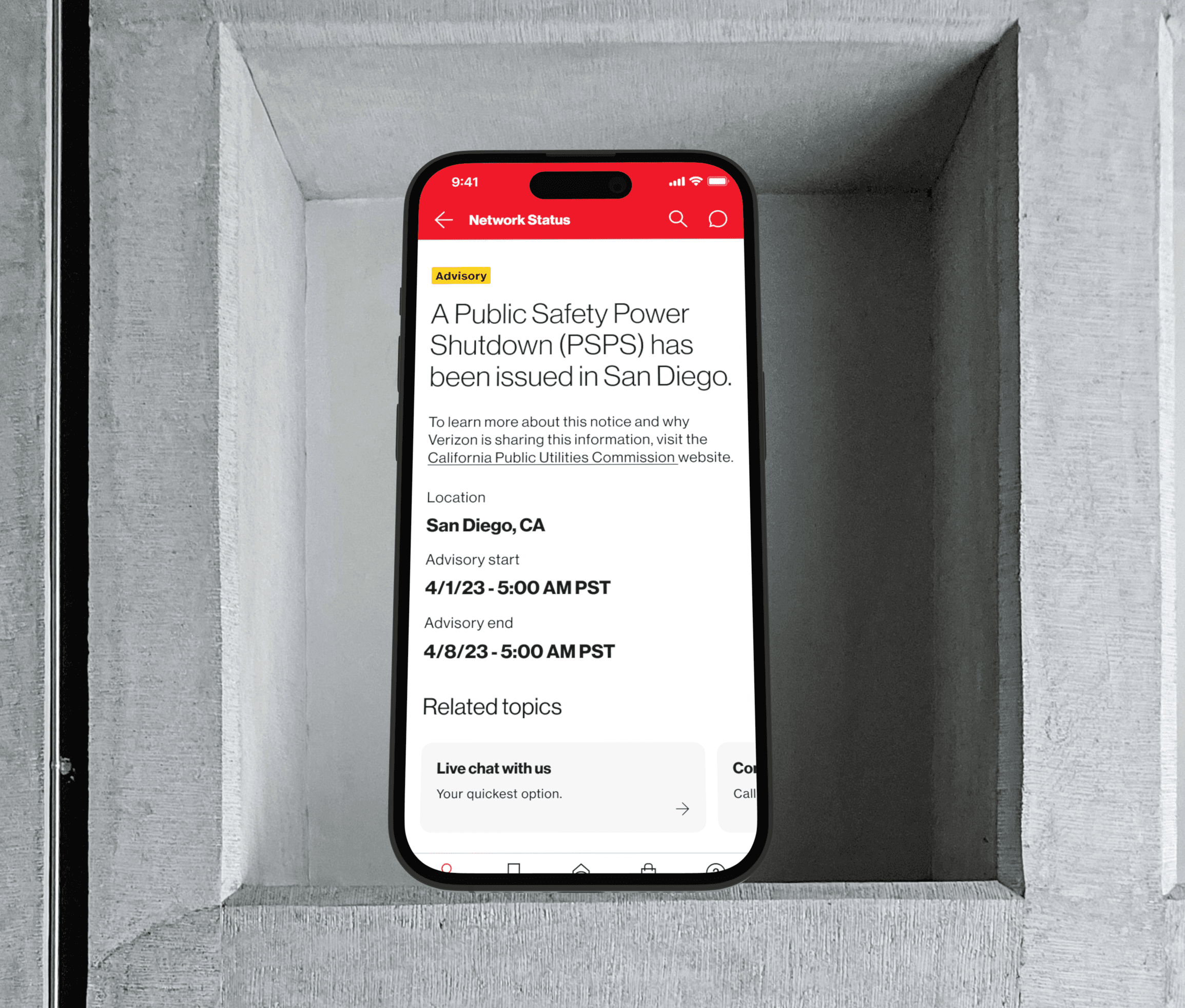
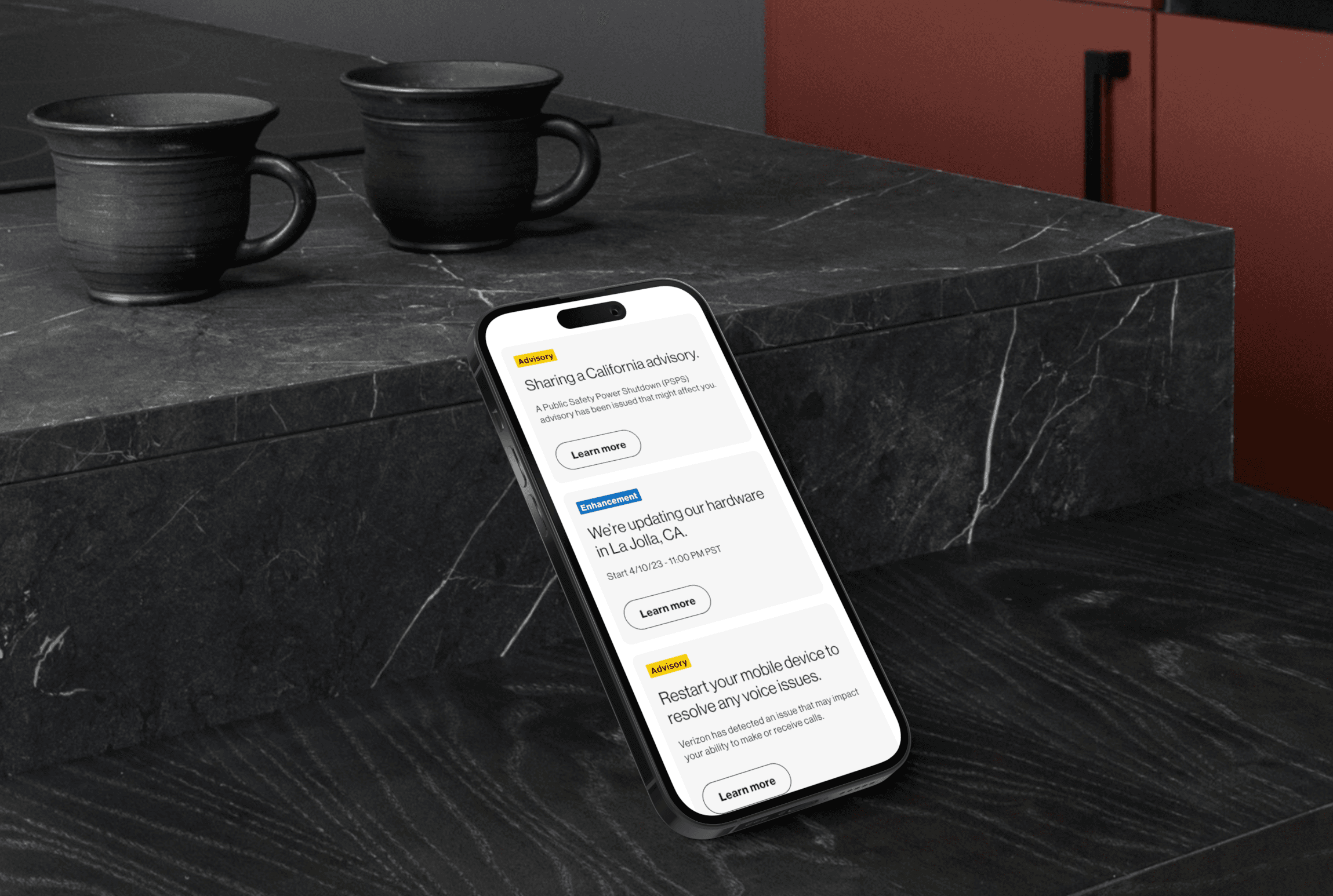
To address these issues, I recommended the creation of a "Network Status Hub" that users could see any and all network events currently affecting them, and the ability to receive updates as outages were resolved via email and text.
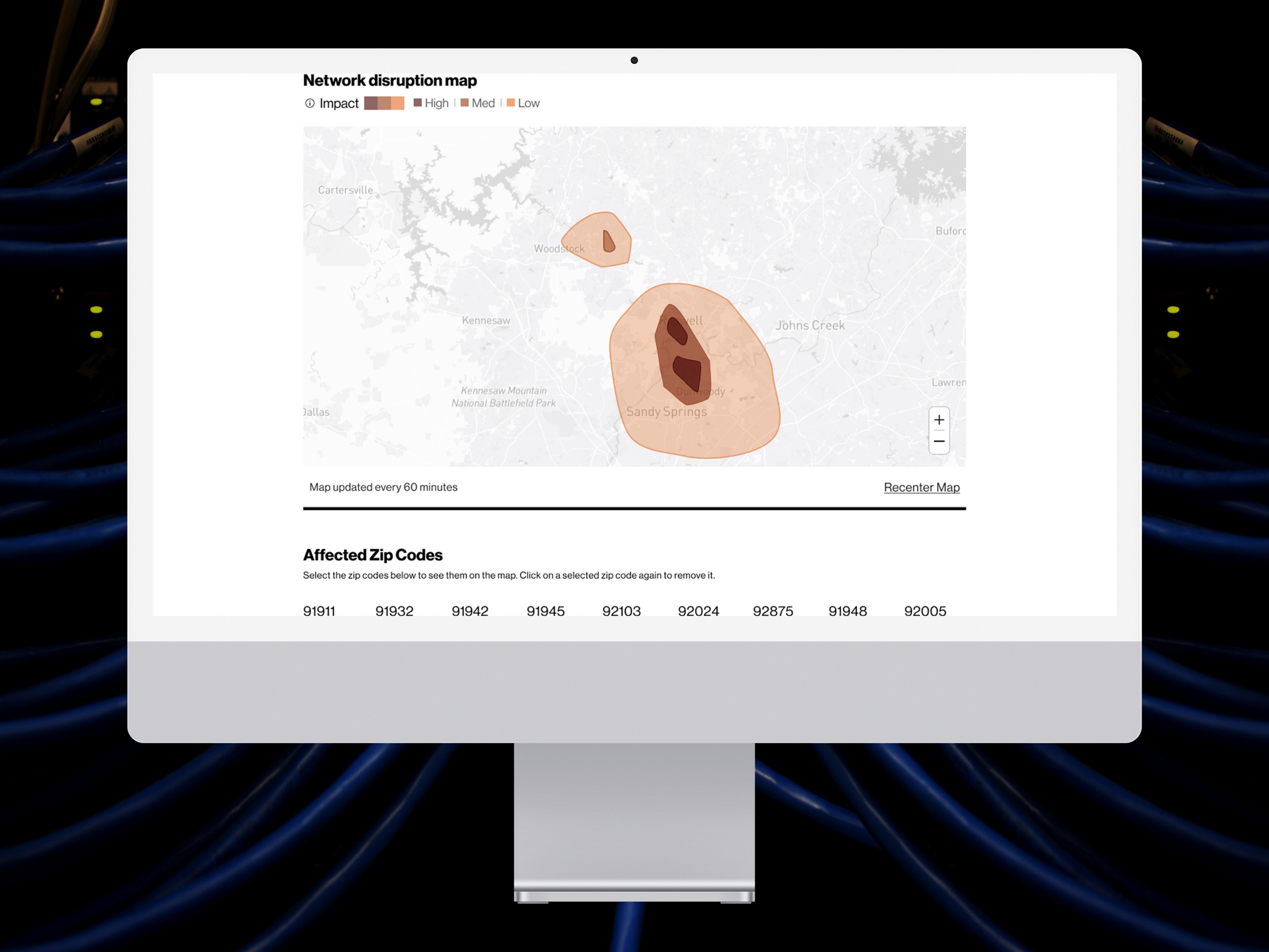
I also created an outage map that not only detailed an outage's physical boundaries, but also showed different levels of service disruption likelihood.
To address these issues, I recommended the creation of a "Network Status Hub" that users could see any and all network events currently affecting them, and the ability to receive updates as outages were resolved via email and text.
I also created an outage map that not only detailed an outage's physical boundaries, but also showed different levels of service disruption likelihood.
Outcomes
3-6 million
Monthly Active Users
3-6 million
Monthly Active Users
1.44%
Call Decrease
1.44%
Call Decrease
As a result of the self-service capabilities provided by a network status hub, email/text updates for outage resolution, and a comprehensive visualization of an outage's impacted area, call volume decreased by 1.44%, and these features are used by roughly 3-6 million users per month, depending on network event frequency.
Given that Verizon receives, on average, 170 million customer service calls per year, and the average cost to telecom providers is $7.50 per call, this results in annual savings of about $18.36 Million per year.
As a result of the self-service capabilities provided by a network status hub, email/text updates for outage resolution, and a comprehensive visualization of an outage's impacted area, call volume decreased by 1.44%, and these features are used by roughly 3-6 million users per month, depending on network event frequency.
Given that Verizon receives, on average, 170 million customer service calls per year, and the average cost to telecom providers is $7.50 per call, this results in annual savings of about $18.36 Million per year.
As a result of the self-service capabilities provided by a network status hub, email/text updates for outage resolution, and a comprehensive visualization of an outage's impacted area, call volume decreased by 1.44%, and these features are used by roughly 3-6 million users per month, depending on network event frequency.
Given that Verizon receives, on average, 170 million customer service calls per year, and the average cost to telecom providers is $7.50 per call, this results in annual savings of about $18.36 Million per year.
Say hello
Let's talk
Let's talk
Let's talk
Looking for someone that can drive measurable outcomes, but also values clarity and craft? Get in touch.
Open to full-time roles and fractional assignments.
Remote or On-Site in Phoenix, AZ metro area preferred, able to relocate for the right opportunity.
Looking for someone that can drive measurable outcomes, but also values clarity and craft? Get in touch.
Open to full-time roles and fractional assignments.
Remote or On-Site in Phoenix, AZ metro area preferred, able to relocate for the right opportunity.
Made with Framer
© 2026
Made with Framer
© 2026